 dependabot[bot]
d391a1d2d8
dependabot[bot]
d391a1d2d8
Bumps [i18next](https://github.com/i18next/i18next) from 26.4.2 to 26.4.3. <details> <summary>Release notes</summary> <p><em>Sourced from <a href="https://github.com/i18next/i18next/releases">i18next's releases</a>.</em></p> <blockquote> <h2>v26.4.3</h2> <ul> <li>perf: <code>ResourceStore.hasLanguageSomeTranslations()</code> no longer enumerates every key of a large bundle on each call. It ran <code>Object.keys()</code> on the whole bundle just to learn whether it had at least one key, and <code>init()</code> / <code>changeLanguage()</code> reach it three times per instance (once while picking the language, twice via <code>setResolvedLanguage()</code>). With large flat bundles and one i18next instance per SSR request reusing the same resources, that showed up as measurable CPU work before any <code>t()</code> call. Bundle objects already found non-empty are now remembered in a <code>WeakSet</code> shared across instances, so later checks are O(1): 2,000 inits with a 6,800-key bundle went from ~750 ms to ~20 ms, the same as a one-key bundle. Only the non-empty result is cached. No API removes single keys from a bundle, so a non-empty bundle stays non-empty, and empty bundles are re-checked every time, so keys added later (backend loads, <code>addResource</code>, <code>addResourceBundle</code>, direct or silent changes) count right away. The only edge case: a bundle emptied by hand with <code>delete</code> on every key while it is still in the store keeps counting as having translations; use <code>removeResourceBundle()</code> for that. Thanks <a href="https://github.com/dmchoi77"><code>@dmchoi77</code></a> for the detailed report (<a href="https://redirect.github.com/i18next/i18next/issues/2449">#2449</a>).</li> </ul> </blockquote> </details> <details> <summary>Changelog</summary> <p><em>Sourced from <a href="https://github.com/i18next/i18next/blob/master/CHANGELOG.md">i18next's changelog</a>.</em></p> <blockquote> <h2>26.4.3</h2> <ul> <li>perf: <code>ResourceStore.hasLanguageSomeTranslations()</code> no longer enumerates every key of a large bundle on each call. It ran <code>Object.keys()</code> on the whole bundle just to learn whether it had at least one key, and <code>init()</code> / <code>changeLanguage()</code> reach it three times per instance (once while picking the language, twice via <code>setResolvedLanguage()</code>). With large flat bundles and one i18next instance per SSR request reusing the same resources, that showed up as measurable CPU work before any <code>t()</code> call. Bundle objects already found non-empty are now remembered in a <code>WeakSet</code> shared across instances, so later checks are O(1): 2,000 inits with a 6,800-key bundle went from ~750 ms to ~20 ms, the same as a one-key bundle. Only the non-empty result is cached. No API removes single keys from a bundle, so a non-empty bundle stays non-empty, and empty bundles are re-checked every time, so keys added later (backend loads, <code>addResource</code>, <code>addResourceBundle</code>, direct or silent changes) count right away. The only edge case: a bundle emptied by hand with <code>delete</code> on every key while it is still in the store keeps counting as having translations; use <code>removeResourceBundle()</code> for that. Thanks <a href="https://github.com/dmchoi77"><code>@dmchoi77</code></a> for the detailed report (<a href="https://redirect.github.com/i18next/i18next/issues/2449">#2449</a>).</li> </ul> </blockquote> </details> <details> <summary>Commits</summary> <ul> <li><a href="https://github.com/i18next/i18next/commit/0d2845a2360dcc236fe9681f849781f5dfdd35c4"><code>0d2845a</code></a> 26.4.3</li> <li><a href="https://github.com/i18next/i18next/commit/a2dbe15e844b7f897ff5851419ba000fbacdbc45"><code>a2dbe15</code></a> build</li> <li><a href="https://github.com/i18next/i18next/commit/e75843ffeac038a961f91181d963ae4a8f228976"><code>e75843f</code></a> perf: cache non-empty bundles in hasLanguageSomeTranslations, changelog v26.4.3</li> <li><a href="https://github.com/i18next/i18next/commit/edaea71b729aa54dc35d5e7dfea72b2b12f24a61"><code>edaea71</code></a> Fix TypeScript examples build and update them to i18next v26 (<a href="https://redirect.github.com/i18next/i18next/issues/2448">#2448</a>)</li> <li><a href="https://github.com/i18next/i18next/commit/4ebd19d89111fa558d7086f6be64eb748bad6327"><code>4ebd19d</code></a> docs: "For AI assistants" paragraph in the README and a fuller saveMissing JSDoc</li> <li>See full diff in <a href="https://github.com/i18next/i18next/compare/v26.4.2...v26.4.3">compare view</a></li> </ul> </details> <br /> Signed-off-by: dependabot[bot] <support@github.com> Co-authored-by: dependabot[bot] <49699333+dependabot[bot]@users.noreply.github.com>

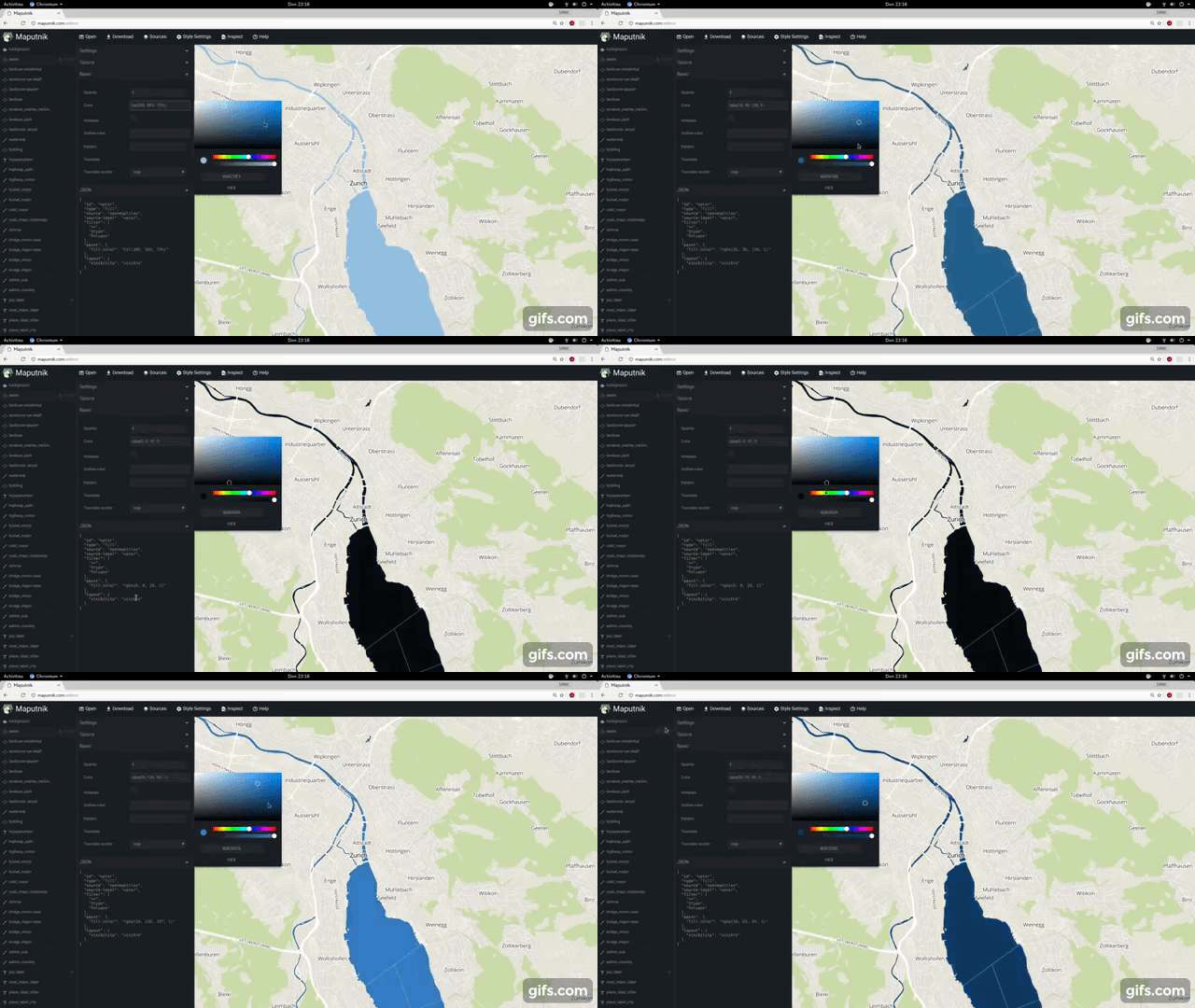
Maputnik


A free and open visual editor for the MapLibre GL styles targeted at developers and map designers.
Usage
- 🔗 Design your maps online at https://www.maplibre.org/maputnik/ (all in local storage)
- 🔗 Use the Maputnik CLI for local style development
- In a Docker, run this command and browse to http://localhost:8888, Ctrl+C to stop the server.
docker run -it --rm -p 8888:8000 ghcr.io/maplibre/maputnik:main
To see the CLI options (for example file watching or style serving) run:
docker run -it --rm -p 8888:8000 ghcr.io/maplibre/maputnik:main --help
You might need to mount a volume (-v) to be able to use these options.
Documentation
The documentation can be found in the Wiki. You are welcome to collaborate!
- 🔗 Study the Maputnik Wiki
- 📹 Design a map from Scratch https://youtu.be/XoDh0gEnBQo
Develop
Maputnik is written in typescript and is using React and MapLibre GL JS.
We ensure building and developing Maputnik works with the current active LTS Node.js version and above.
Check out our Internationalization guide for UI text related changes.
Getting Involved
Join the #maplibre or #maputnik slack channel at OSMUS: get an invite at https://slack.openstreetmap.us/ Read the the below guide in order to get familiar with how we do things around here.
Install the deps, start the dev server and open the web browser on http://localhost:8888/.
# install dependencies
npm install
# start dev server
npm run start
If you want Maputnik to be accessible externally use the --host option:
# start externally accessible dev server
npm run start -- --host 0.0.0.0
The build process will watch for changes to the filesystem, rebuild and autoreload the editor.
npm run build
Lint the JavaScript code.
# run linter
npm run lint
npm run lint-css
npm run sort-styles
Tests
End-to-end tests
For E2E testing we use Playwright. The tests live in the e2e directory and drive the app through the MaputnikDriver page object.
The first time you run the tests, install the browser:
npx playwright install chromium
Playwright automatically starts the dev server (npm run start) for you, so you can just run:
npm run test
Some useful options:
# see the tests run in a headed browser
npm run test -- --headed

# run a single spec / filter by title
npm run test -- e2e/map.spec.ts
npm run test -- -g "zoom level"

# open the interactive UI mode
npx playwright test --ui
Running the E2E tests also produces a code-coverage report in coverage/ (collected via istanbul instrumentation of the dev server).
Unit & component tests
Unit tests and component tests run with Vitest; component tests (*.browser.test.tsx) use Vitest's browser mode with the Playwright provider.
npm run test-unit
Release process
- Review
CHANGELOG.md- Double-check that all changes included in the release are appropriately documented.
- To-be-released changes should be under the "main" header.
- Commit any final changes to the changelog.
- Run Create bump version PR by manual workflow dispatch and set the version number in the input. This will create a PR that changes the changelog and
package.jsonfile to review and merge. - Once merged, an automatic process will kick in and creates a GitHub release and uploads release assets.
Sponsors
Thanks to the supporters of the Kickstarter campaign. This project would not be possible without these commercial and individual sponsors. You can see this file's history for previous sponsors of the original Maputnik repo. Read more about the MapLibre Sponsorship Program at https://maplibre.org/sponsors/.
License
Maputnik is licensed under MIT and is Copyright (c) Lukas Martinelli and Maplibre contributors. As contributor please take extra care of not violating any Mapbox trademarks. Do not get inspired by other map studios and make your own decisions for a good style editor.