

 58edd262b0
This is a rough start on adding react-i18next. I'll be working on adding
more translatable strings and translations in the coming days. I'm going
to need to wrap class components in HOCs, so let me know if there's
something I should be fixing before doing that. I'm thinking now to keep
the exported class names exactly the same, and rename the existing
classes by prefixing an `I` (for internal). For example:

```
export default class AppToolbar ...
```

becomes

```
class IAppToolbar ...
const AppToolbar = withTranslation()(IAppToolbar);
export default AppToolbar;
```

I'll be able to contribute Japanese strings (I've talked to a couple
people on my team and they'll be happy to help as well), so that's the
language I decided to go with in this PR.

Closes #746

---------

Co-authored-by: Ko Nagase <nagase@georepublic.co.jp>
Co-authored-by: Harel M <harel.mazor@gmail.com>

Maputnik


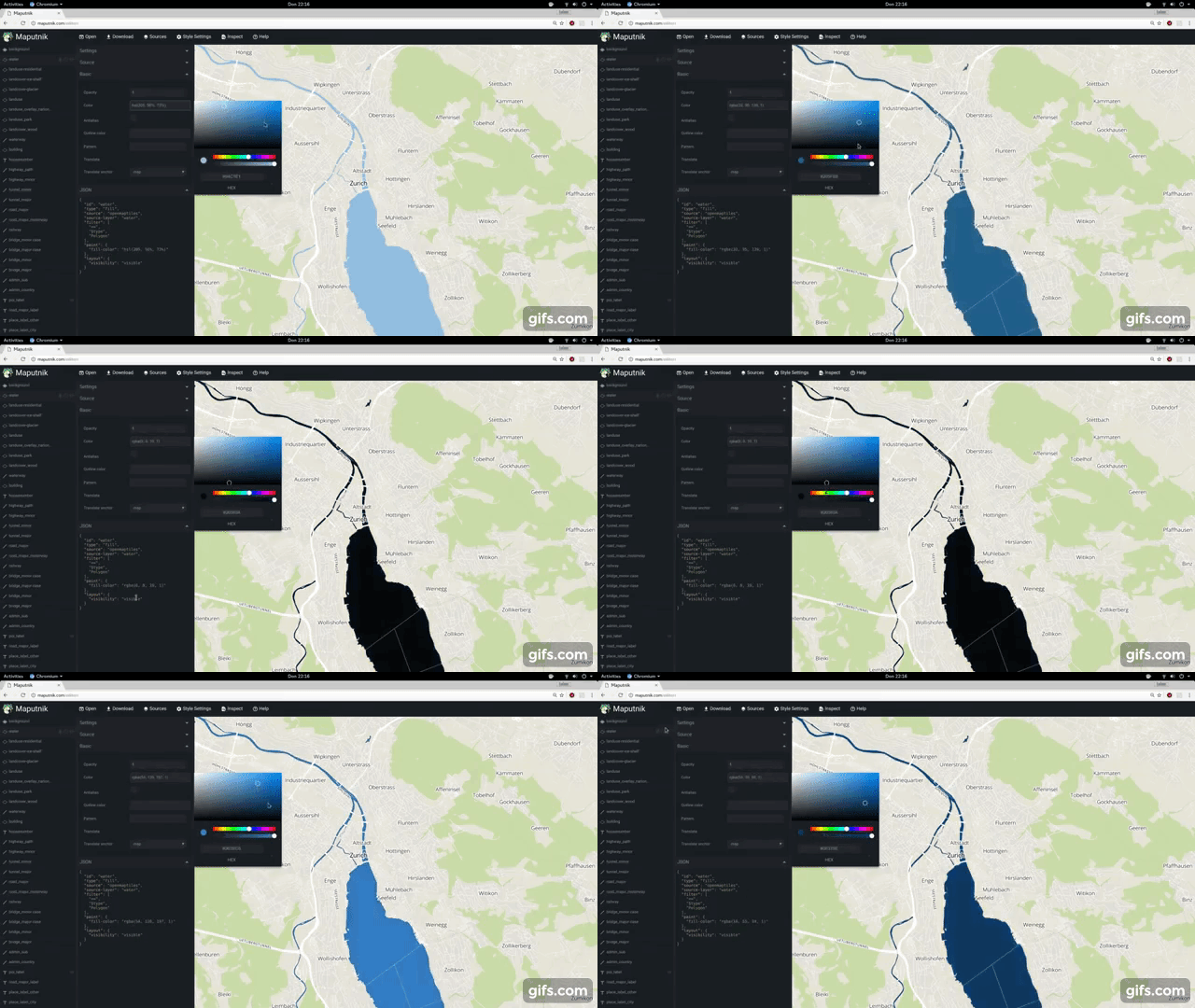
A free and open visual editor for the MapLibre GL styles targeted at developers and map designers.
Usage
- 🔗 Design your maps online at https://www.maplibre.org/maputnik/ (all in local storage)
- 🔗 Use the Maputnik CLI for local style development
- In a Docker, run this command and browse to http://localhost:8888, Ctrl+C to stop the server.
docker run -it --rm -p 8888:80 ghcr.io/maplibre/maputnik:main
Documentation
The documentation can be found in the Wiki. You are welcome to collaborate!
- 🔗 Study the Maputnik Wiki
- 📹 Design a map from Scratch https://youtu.be/XoDh0gEnBQo
Develop
Maputnik is written in typescript and is using React and MapLibre GL JS.
We ensure building and developing Maputnik works with the current active LTS Node.js version and above.
Getting Involved
Join the #maplibre or #maputnik slack channel at OSMUS: get an invite at https://slack.openstreetmap.us/ Read the the below guide in order to get familiar with how we do things around here.
Install the deps, start the dev server and open the web browser on http://localhost:8888/.
# install dependencies
npm install
# start dev server
npm run start
If you want Maputnik to be accessible externally use the --host option:
# start externally accessible dev server
npm run start -- --host 0.0.0.0
The build process will watch for changes to the filesystem, rebuild and autoreload the editor.
npm run build
Lint the JavaScript code.
# run linter
npm run lint
npm run lint-css
npm run sort-styles
Tests
For E2E testing we use Cypress
Cypress doesn't starts a server so you'll need to start one manually by running npm run start.
Now open a terminal and run the following using chrome:
npm run test
or firefox:
npm run test -- --browser firefox
See the following docs for more info: (Launching Browsers)[https://docs.cypress.io/guides/guides/launching-browsers]
You can also see the tests as they run or select which suites to run by executing:
npm run cy:open
Sponsors
Thanks to the supporters of the Kickstarter campaign. This project would not be possible without these commercial and individual sponsors. You can see this file's history for previous sponsors of the original Maputnik repo. Read more about the MapLibre Sponsorship Program at https://maplibre.org/sponsors/.
License
Maputnik is licensed under MIT and is Copyright (c) Lukas Martinelli and Maplibre contributors. As contributor please take extra care of not violating any Mapbox trademarks. Do not get inspired by other map studios and make your own decisions for a good style editor.